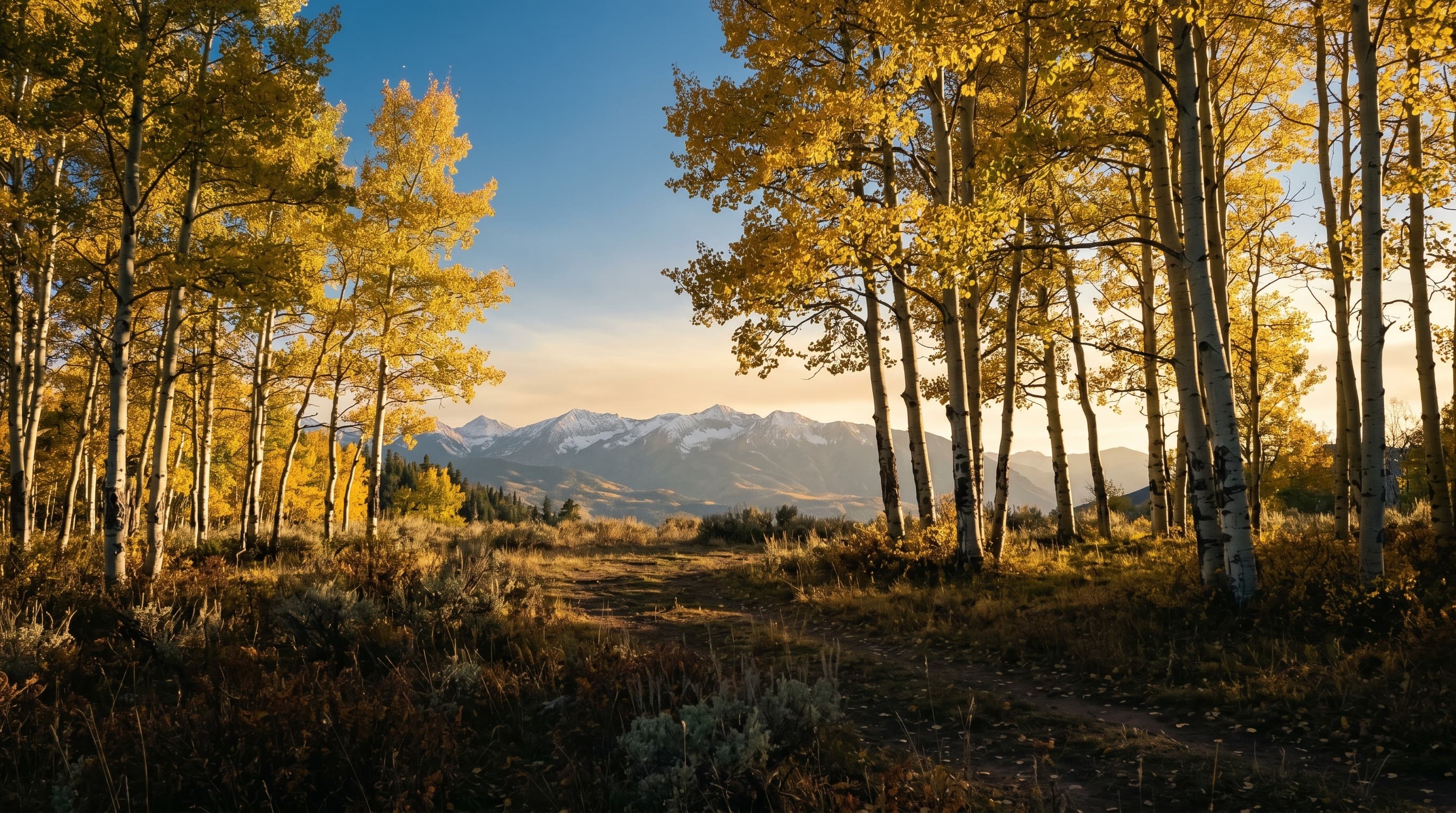
Aspen & the Roaring Fork Valley
West End to Red Mountain. Alpine restraint — warm trad, not mountain-modern.
Pitkin County, Colorado.
Aspen's residential luxury market runs among the narrowest and most competitive in North America — median sales above $11M, with Red Mountain and Starwood trophy estates routinely clearing $30M–$80M. The dominant architectural conversation here is mountain-modern (CCY, Studio B, Olson Kundig orbit), and we are honest with clients: we are not the firm for an Aspen glass-and-basalt house. We are the firm for the quieter, warmer, more-collected thread that lives alongside that mainstream — the Charles Cunniffe traditional work, the Shope Reno Wharton trophy trad, the Ralph Lauren Double-RL sensibility the client class recognizes even when it isn't on the cover of the local magazine.
Our Aspen practice is travel-delivered — from Montecito today, from the NorCal satellite once it opens in 2027 — with weekly principal presence during active construction and a retained Aspen project manager triggered once two concurrent projects are in CD. Flights from SBA to ASE route via DEN; drive time from either coast is prohibitive for weekly cadence without careful scheduling.
Pitkin County's Urban Growth Management Plan and TDR (transferable development rights) regime make new construction inside Aspen proper a slow, surgical exercise — most of our work here will be high-investment renovation, adaptive reuse of mining-era and mid-century stock, and meaningful expansion. Downvalley (Old Snowmass, Woody Creek, Basalt, Missouri Heights, Carbondale) opens up new-construction programs on larger parcels with the same aesthetic discipline and less regulatory friction.
Our collaborator bench here includes Charles Cunniffe Architects, Rowland + Broughton, Forum Phi, and Hansen Architects locally — plus Shope Reno Wharton and Bohlin Cywinski Jackson from outside the valley when a client's program calls for that pedigree. The builder class is tight and reputation-driven; Hansen Construction, Brikor Associates, Schlosser, and Koru are the names that travel.
Design character.
Alpine Mediterranean
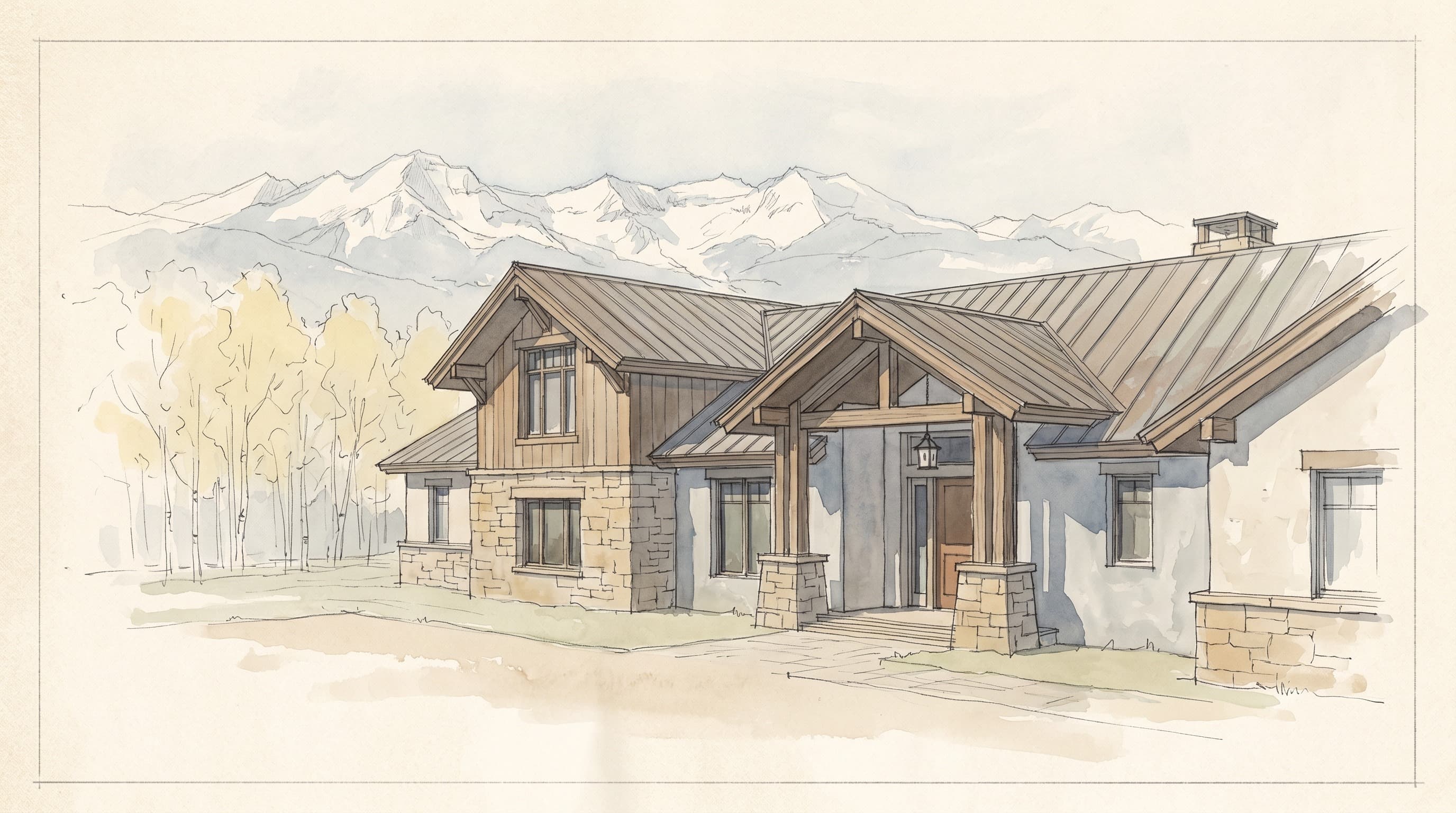
Heavy timber frame (Douglas fir, reclaimed oak, white fir), native granite and Colorado rundle stone, warm lime plaster, hand-worked iron. The Tahoe vocabulary extended into the Elk Range — our lane, specifically.
Mining-Era Adaptive Reuse
Aspen's West End is a living library of 1880s–1910s Victorian and mining-era housing stock. Our approach restores what deserves it and expands where the original program won't carry contemporary life.
Warm Traditional
Not lodge, not log-cabin kitsch — the collected, library-forward, generational-dwelling mountain house. Ralph Lauren's sensibility made architecturally permanent.
High-Altitude Detail Discipline
R-30+ envelopes, triple-glazed fenestration, snow-load engineering, high-MERV filtration, elevation-compensating HVAC, and winter-service-capable mechanical rooms are baseline specs — not upgrades.
Neighborhoods and sub-submarkets.
Historic 1880s–1910s residential grid. Tight parcels, extraordinary tree canopy, Victorian and mining-era stock. $10M–$40M, renovation-dominant.
The Aspen trophy market. Mountain-view parcels directly above town; $30M–$80M+ estates, modernist-dominant with a growing trad segment.
Guard-gated community west of Aspen. $15M–$40M, mixed architectural vocabulary; high-security clientele.
Ski-in/ski-out and golf-adjacent communities. $8M–$25M; newer construction, more programmatic scale.
Ranch-character downvalley communities. Larger parcels, agrarian vocabulary, $6M–$18M with select trades higher.
Downvalley (35–40 min from Aspen) — larger-acreage compounds and ranch-style estates. $4M–$12M, looser regulation, warmer aesthetic freedom.
What makes Aspen Cerro.
The specific materials, methods, and moves we bring to projects in this market — tuned to its climate, its vernacular, and the clientele that builds here.
Aspen publications.
On the ground.
What people ask about Aspen.
What is the per-square-foot cost of luxury construction in Aspen?
Total turnkey luxury construction in Aspen ranges from $2,500 to $5,000 per square foot in 2025–26, with the median project landing near $3,500 per square foot for elevated-luxury finish. A 5,000 sqft mid-tier project runs approximately $17.5M turnkey — including envelope, structure, MEP, interiors, FF&E, landscape, and contingency.
Which architects work in Aspen?
The leading luxury residential architects in Aspen include Charles Cunniffe Architects, Rowland + Broughton Architecture, Forum Phi Architecture, Hansen Architects, and others. Cerro Studio collaborates with these firms on shared projects — leading interior architecture, materials, FF&E, and the long-form client relationship while the architect leads envelope, structure, and the architectural review process.
Who are the top luxury builders in Aspen?
Leading luxury custom-home builders in Aspen include Hansen Construction, Brikor Associates, Schlosser Construction, Koru Ltd, and others. Cerro Studio works alongside these builders on site — material reviews, change orders, the punch list, and final styling — to ensure the design intent reaches occupancy.
What is the typical project investment range in Aspen?
Luxury residential projects in Aspen typically fall in the $8M – $60M+ range for the kind of work Cerro Studio leads. Smaller in-town renovations and additions run below the lower end; trophy estates with full programs (pool, cellar, ADU) can exceed the upper end. These are total turnkey project budgets, not just construction or design fees.
What architectural style does Cerro Studio bring to Aspen projects?
Our Aspen work is rooted in the regional vernacular — Alpine Mediterranean — adapted with our material lexicon: Hand-hewn reclaimed timber frame — Douglas fir, white oak, salvaged barnwood; Native Colorado granite, rundle stone, and Lyons sandstone; Standing-seam metal or naturally-patinated copper roof. We design to the parcel, not to a stylistic template.
How does Cerro Studio deliver projects in Aspen?
Aspen is served via travel-delivered from nearest studio. Engagements are principal-led and include weekly site visits during critical construction phases, biweekly cadence otherwise. Every inquiry is read by the principal designer and the studio manager, with a personal response within five business days.