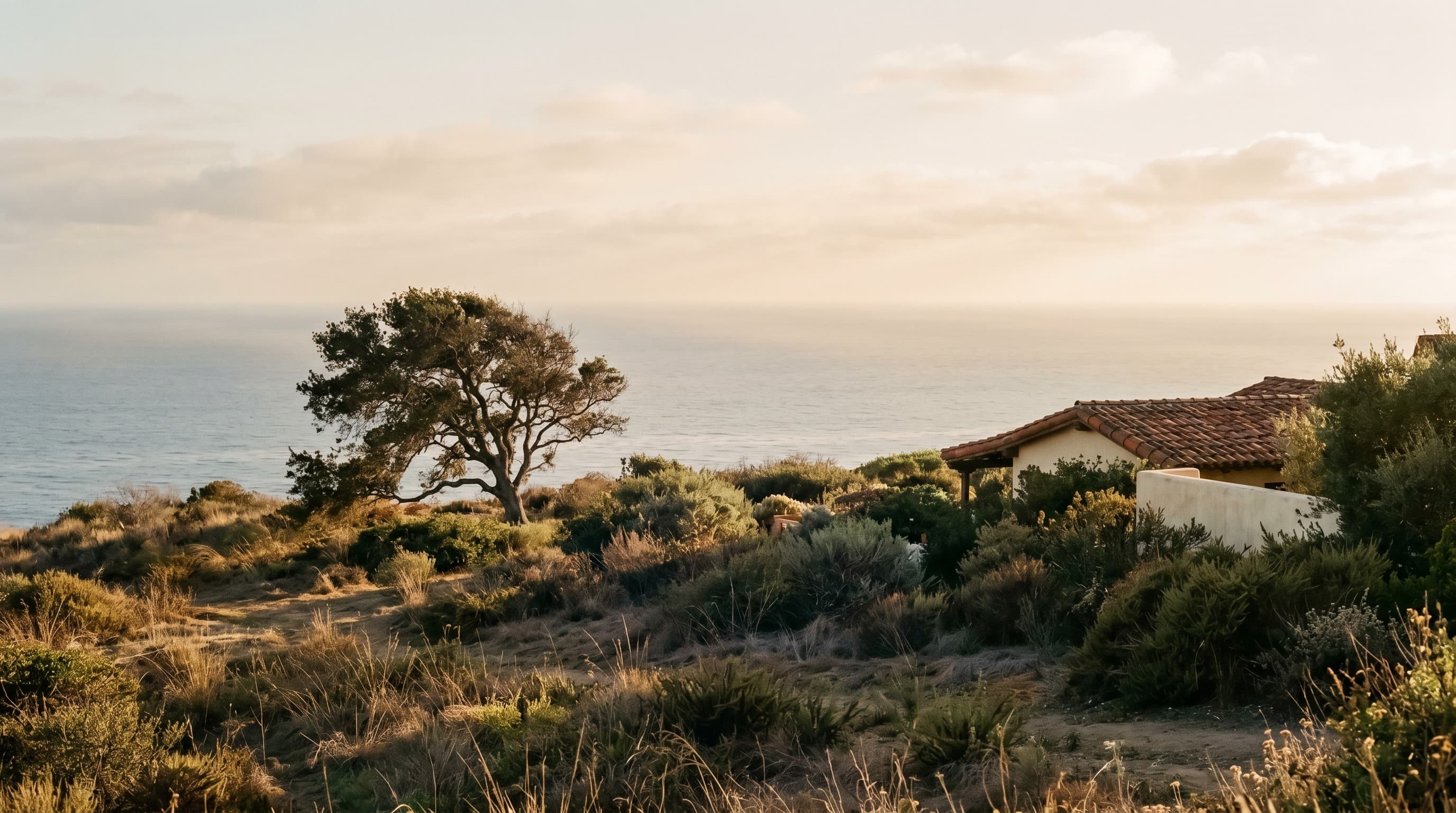
The Los Angeles Westside
Bel-Air to Malibu, Palisades to Hidden Hills. Rebuilding with patina, not polish.
Los Angeles County.
The Los Angeles Westside is the largest luxury residential market in North America by dollar volume — and the most competitively saturated with design talent. Our claim here is specific: the same restraint that defines a Montecito estate works in the Palisades, in Bel-Air, and in Hidden Hills. Not every Westside home wants to look like Hollywood.
We opened our LA satellite in 2026 to serve the full Westside client — the long-tenured Bel-Air family, the new-to-California tech founder in Brentwood, the rebuild client in Pacific Palisades or Malibu navigating insurance timelines and a twenty-four month wait at every established firm on the Westside. Our response window is five business days on qualified inquiries. Our LA studio lead owns the day-to-day; the Montecito principal is on-site weekly during CD and install.
The January 2025 Palisades and Eaton fires destroyed more than eleven thousand structures. Only a fraction have been fully rebuilt. The design pipeline for the next three years is unlike anything the Westside has seen in a generation — and the incumbent firms are at capacity. We are building our rebuild practice to answer the specific needs of insurance-timeline-driven clients: faster assessment, disciplined scope, and a design language that recovers the character of what was lost rather than replacing it with something that photographs well.
Our aesthetic translates cleanly to the Westside's more traditional corners — Hancock Park, Pasadena, San Marino, the Bel-Air estates west of the 405, the Palisades bluffs above Sunset. It translates less to Bird Streets modern or Beverly Hills trophy-modern, and we are honest about that. We are not the right firm for a spec-built Trousdale glass box. We are the right firm for a Palisades family rebuilding a home that feels like the one they lost — plus the infrastructure they should have had all along.
Design character.
Rebuild with Patina
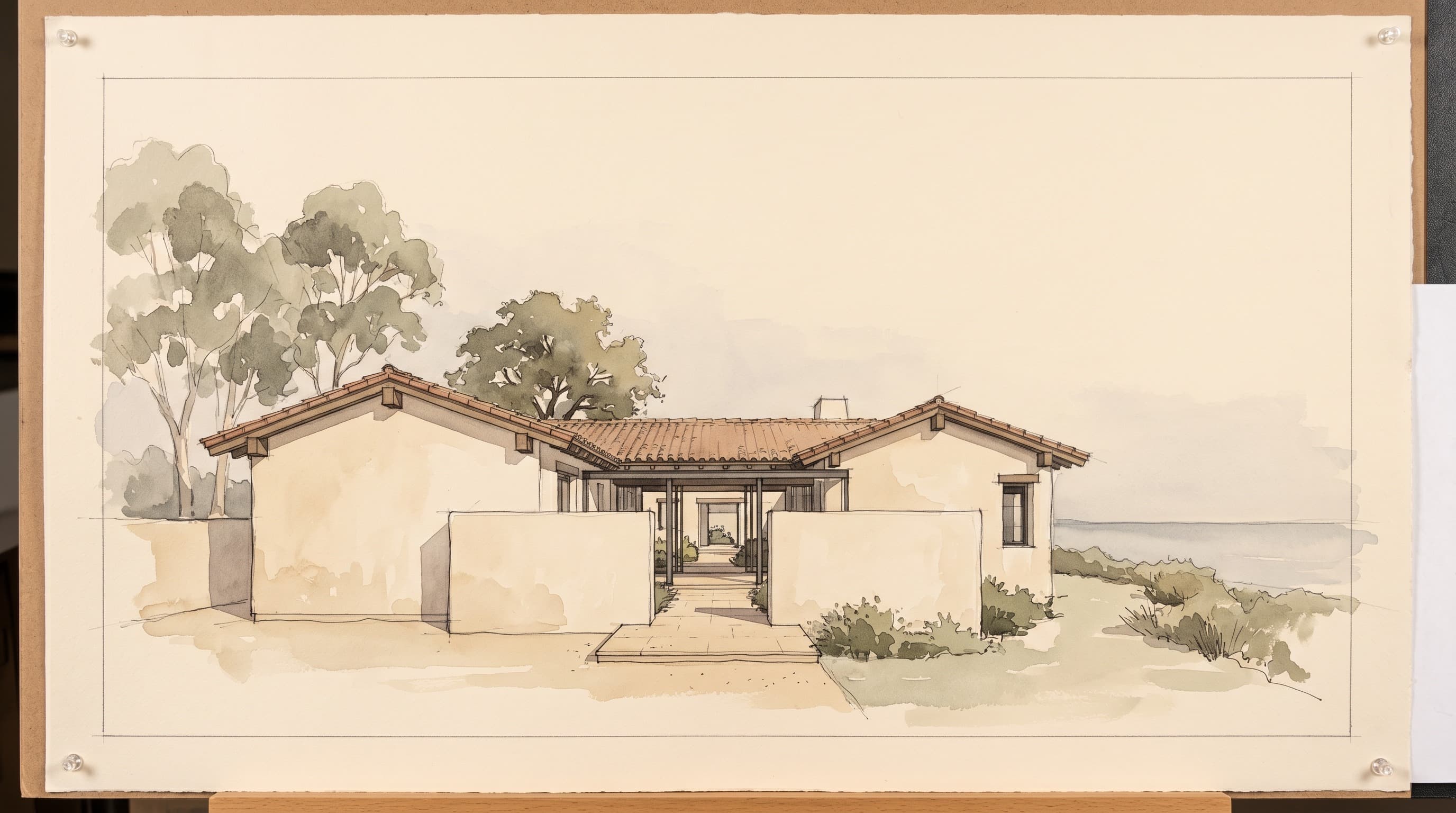
A home that has existed in this landscape for decades, not one that photographs freshly delivered. Recovered beam, salvaged hardware, lime plaster, reclaimed clay tile — the design language of a house that survived, even when it didn't.
Not LA-Coded
Our Westside clients want Montecito sensibility executed on a Palisades lot or a Brentwood compound. Warmth over drama, craft over gesture, restraint over show.
Hospitality-ification Literacy
Westside programs at this scale include catering kitchens, sommelier cellars, caretaker quarters, guest wings with separate entries. We design for this without losing residential warmth.
Fire-Resilient Construction
For rebuild clients, Class A roofing, non-combustible cladding, ember-resistant venting, and defensible landscape are design problems, not compliance checkboxes.
Neighborhoods and sub-submarkets.
Lower Bel-Air, Bel-Air Crest, Stone Canyon. Multi-acre estates, $20M–$100M+. The last great legacy-estate market in LA.
Traditional Beverly Hills, Benedict Canyon, Beverly Park. Trophy spec activity concentrated here — we work on the custom side.
Sunset / Beverly Glen / Carolwood. Discreet old-money; the Westside's quietest wealth.
Riviera, Huntington, Alphabet Streets, Palisades Highlands. 6,800+ structures destroyed 2025; rebuild pipeline through 2029.
Point Dume, Paradise Cove, Broad Beach, Carbon Beach, Encinal Canyon. Coastal rebuild plus ongoing custom work.
North of Sunset, Brentwood Park, Mandeville Canyon. Tech wealth, thoughtful families, restrained programs.
Guard-gated equestrian estates and upper San Fernando estates. Mediterranean and Tuscan vernaculars dominate — natural aesthetic fit.
What makes LA Westside Cerro.
The specific materials, methods, and moves we bring to projects in this market — tuned to its climate, its vernacular, and the clientele that builds here.
LA Westside publications.
On the ground.
What people ask about LA Westside.
What is the per-square-foot cost of luxury construction in LA Westside?
Total turnkey luxury construction in LA Westside ranges from $1,500 to $3,500 per square foot in 2025–26, with the median project landing near $2,200 per square foot for elevated-luxury finish. A 5,000 sqft mid-tier project runs approximately $11M turnkey — including envelope, structure, MEP, interiors, FF&E, landscape, and contingency.
Which architects work in LA Westside?
The leading luxury residential architects in LA Westside include Marmol Radziner, KAA Design Group, Standard (Jeff Allsbrook), Walker Workshop, and others. Cerro Studio collaborates with these firms on shared projects — leading interior architecture, materials, FF&E, and the long-form client relationship while the architect leads envelope, structure, and the architectural review process.
Who are the top luxury builders in LA Westside?
Leading luxury custom-home builders in LA Westside include Finton Construction, Winkle Custom Homes, Patterson Custom Homes, Don Nulty, and others. Cerro Studio works alongside these builders on site — material reviews, change orders, the punch list, and final styling — to ensure the design intent reaches occupancy.
What is the typical project investment range in LA Westside?
Luxury residential projects in LA Westside typically fall in the $8M – $100M+ range for the kind of work Cerro Studio leads. Smaller in-town renovations and additions run below the lower end; trophy estates with full programs (pool, cellar, ADU) can exceed the upper end. These are total turnkey project budgets, not just construction or design fees.
What architectural style does Cerro Studio bring to LA Westside projects?
Our LA Westside work is rooted in the regional vernacular — Rebuild with Patina — adapted with our material lexicon: Recovered and reclaimed structural elements; Lime plaster and hand-troweled finishes; Class A fire-rated cladding integrated with design intent. We design to the parcel, not to a stylistic template.
How does Cerro Studio deliver projects in LA Westside?
LA Westside is served via la satellite — in-house. Engagements are principal-led and include weekly site visits during critical construction phases, biweekly cadence otherwise. Every inquiry is read by the principal designer and the studio manager, with a personal response within five business days.